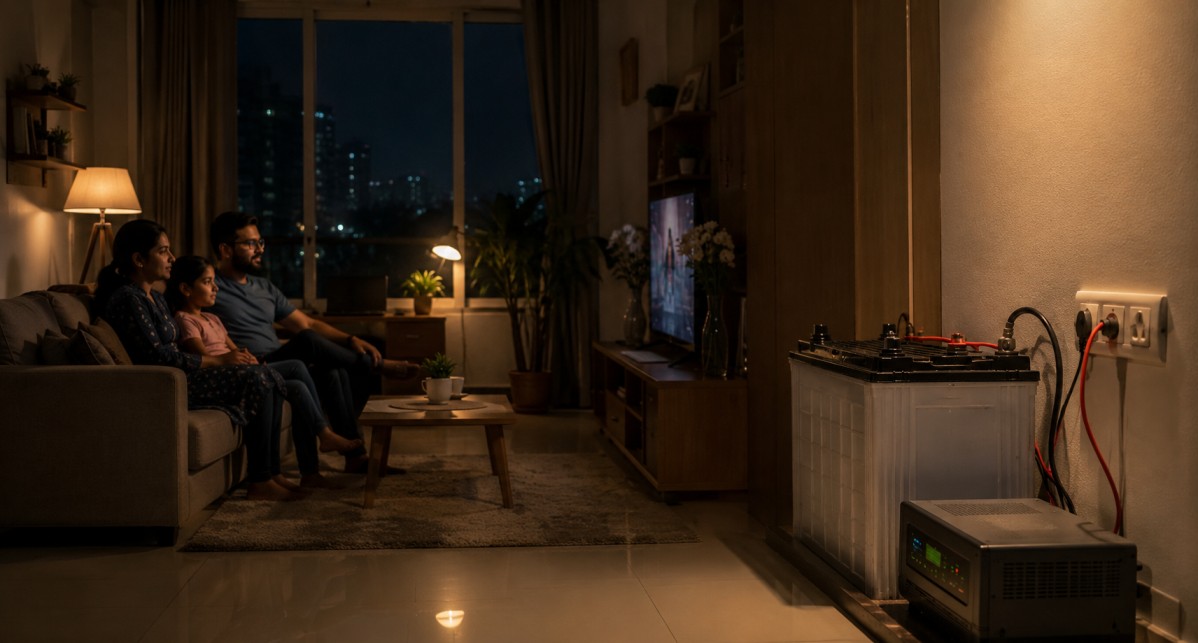
Most inverter batteries do not lose backup in one day.
The signs start slowly.
Earlier the battery gave backup for three or four hours. Now it drops early. The inverter takes longer to charge. Water level falls faster. Sometimes the battery heats more than usual. Many users ignore these signs because the inverter is still running.
But small mistakes can slowly reduce battery life.
At Radix, an inverter battery manufacturer in India, we see this often with home and shop users. The battery may be good, but the way it is used, charged, or maintained can shorten its backup life.
Overloading The Inverter
This is one of the most common mistakes.
People buy an inverter battery for a few lights and fans. Later, they keep adding more load. Wi-Fi router, TV, CCTV, extra fan, shop lights, billing machine, computer — slowly the battery starts handling more than planned.
The inverter may still run, but the battery drains faster.
If this happens again and again, backup life starts reducing. So before blaming the battery, check what is connected to the inverter. A battery selected for basic home use cannot perform like a bigger commercial backup setup.
A good inverter battery manufacturer in Meerut will always suggest matching the battery with the real load, not just buying by Ah rating.
Poor Ventilation Around The Battery
Batteries need breathing space.
Many people keep inverter batteries under stairs, inside closed cabinets, near kitchen walls, or in tight corners. This becomes worse in summer.
During charging, the battery naturally gets warm. If there is no airflow, heat stays trapped. Over time, this affects battery life and backup performance.
Keep the battery in a dry, clean, and ventilated place. Do not keep it in direct sunlight. Do not keep it where water can fall. A little open space around the battery helps more than people think.
Ignoring Water Level
For lead-acid inverter batteries, water level matters.
If the water level drops too low, the plates inside the battery can get damaged. Once that happens, backup will not remain the same.
Use only distilled water where topping is needed. Do not use tap water, RO water, or random local water. Wrong water can leave impurities inside the battery and slowly affect performance.
This is a small maintenance step, but ignoring it can shorten battery life badly.
Letting The Battery Stay Discharged
After a long power cut, the battery needs proper charging time.
But in many areas, power cuts happen repeatedly. The battery discharges, gets half-charged, then discharges again. This is hard on the battery.
If the battery stays discharged for too long, sulphation can increase. Once sulphation builds up, backup starts falling.
So if your battery is not getting enough charging time, or backup keeps dropping even after full charging, get the inverter and battery checked.
Loose Terminals And Poor Wiring
Sometimes the battery is not the main problem.
Loose terminals, weak cables, corrosion, or poor wiring can affect charging and backup. The inverter may not charge the battery properly. Current flow may become weak. The battery may look faulty even when the real issue is connection-related.
Check terminals from time to time. If you see white or greenish deposits, get them cleaned safely. Do not keep using the system with loose or dirty connections.
Wrong Battery Selection
Every home or shop does not need the same battery.
A small home, a large house, a shop, and an office all have different backup needs. If the battery is too small for the load, it will get overworked. If the inverter does not match the battery, charging may not happen properly.
This is where choosing the right Inverter battery manufacturer UP matters. Radix helps users and dealers understand battery selection based on load, backup time, and usage pattern.
A reliable inverter battery manufacturer in India should not only sell the battery. It should also guide users on proper use.
Final Thoughts
Inverter battery backup depends on more than the battery brand.
Load, ventilation, water level, charging time, wiring, and battery selection all matter.
Most backup problems start with small mistakes. Overloading the inverter. Keeping the battery in a hot corner. Ignoring water level. Using poor wiring. Letting the battery stay discharged.
If these things are controlled, the battery can perform better and last longer.
At Radix, the goal is simple: help users get steady backup without regular battery trouble. A good inverter battery should support daily power needs, handle regular charging, and not become a headache after a few months.