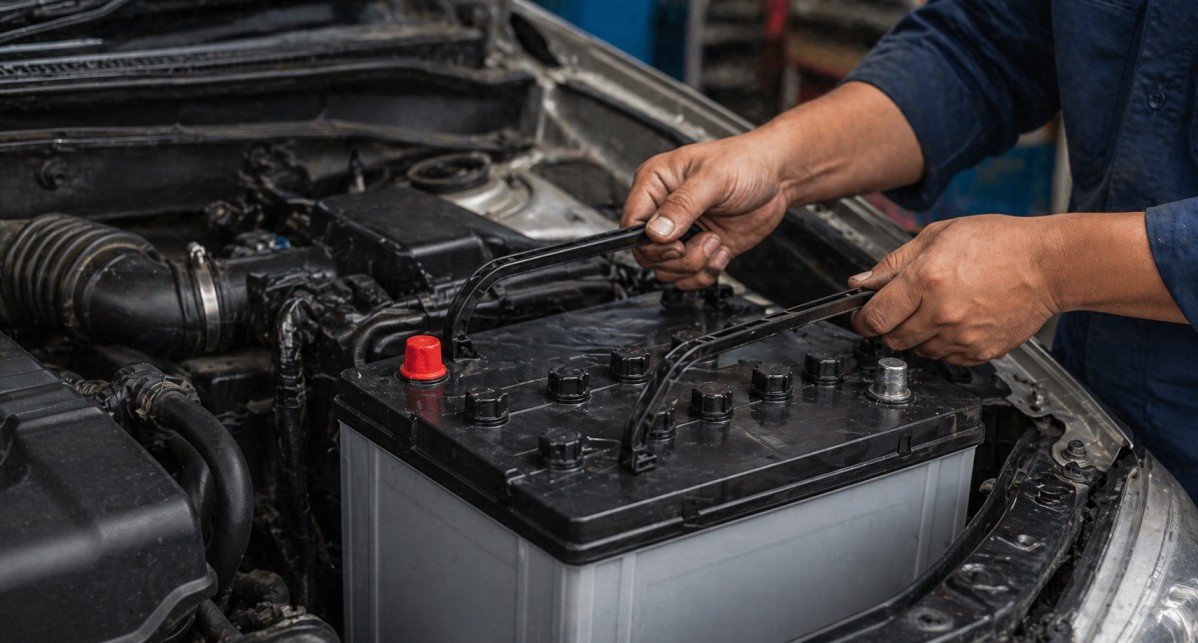
Most vehicle owners think about the battery only when the vehicle refuses to start. You turn the key, or press the start button, and the engine struggles. Sometimes there is only a clicking sound. Sometimes the lights come on, but the starter feels weak. And then the usual guess starts — “battery down hai.”
Many times, yes, the battery is weak. But not always. Sometimes the terminal is loose. Sometimes the alternator is not charging properly. Sometimes the vehicle has been parked for too many days. Sometimes extra lights, music system, GPS, or other accessories are pulling more load than the battery was selected for.
That is why understanding a vehicle battery is useful. Not in a textbook way. Just enough so you do not buy the wrong battery or replace a good one by mistake.
Radix works among automotive battery manufacturers in India, and from a practical point of view, the job of a battery is simple: the vehicle should start when needed and the electrical system should not struggle.
What Does An Automotive Battery Actually Do?
The first job of an automotive battery is starting the engine. When the vehicle is off, the battery stores power. When you start the vehicle, it gives a strong current to the starter motor. After the engine starts, the alternator begins charging the battery again.
That is the basic cycle. But today’s vehicles are not like older ones. Even small cars now have more electrical load than before. Central locking, infotainment system, sensors, parking camera, cabin lights, mobile charger, GPS, and sometimes aftermarket accessories also keep taking power.
So the battery is not only sitting there for starting. It is also supporting the vehicle’s electrical demand, especially when the engine is off or running at low speed.
This is why the correct battery size matters. A weak or undersized battery may work for a few weeks, maybe a few months. But later the signs start: slow crank, dim lights, frequent jump-starts, or battery drain after parking.
Common Types Of Automotive Batteries
Most regular vehicles still use lead-acid batteries. They are common because they are affordable, proven, and suitable for starting applications.
A lead-acid automotive battery is generally used in cars, tractors, small commercial vehicles, and many other vehicles where strong starting current is needed.
There are flooded lead-acid batteries, which may need electrolyte checking depending on the design. Then there are maintenance-free or low-maintenance options, which are easier for users who do not want regular checking.
VRLA batteries are another type. These include AGM and Gel batteries. They are sealed and generally need less maintenance. They are useful where leakage control, vibration resistance, and cleaner handling matter.
Lithium-ion batteries are also used in the automotive space, mainly in electric vehicles and advanced applications. These batteries are light but cost more at the start..
So when people talk about vehicle batteries, they should not assume one battery fits all. The right choice depends on vehicle type, usage, starting load, and budget.
What Is Inside A Lead-Acid Battery?
A lead-acid battery has positive plates, negative plates, separators, and electrolyte.
The positive plates are generally made with lead dioxide. The negative plates use sponge lead. The electrolyte is sulphuric acid solution. When the battery discharges, the chemical reaction inside produces electricity.
This sounds simple from outside, but the real difference is inside the battery.
Plate quality, grid design, paste quality, separators, container strength, and manufacturing control all affect battery performance. Two batteries may look almost the same from outside, but one may handle heat, vibration, and repeated starting better than the other.
This is where choosing the right vehicle battery manufacturer matters. It is not only about the label on the battery. It is about how the battery behaves after months of real use.
What Do Ah And CCA Mean?
Many buyers ask only for “kitne Ah ki battery hai?”
Ah is important, but it is not the only thing.
Ah, or Ampere-Hour, tells the capacity of the battery. It gives an idea of how much current the battery can deliver over time.
CCA, or Cold Cranking Amps, tells how strongly the battery can crank the engine in cold conditions. In colder areas, or in diesel vehicles, CCA becomes more important because the engine needs more starting power.
Even in regular Indian climate conditions, a weak cranking ability of the battery may pose problems in case the car stays idle for a long period, the engine is larger, or the climate is cooler.
Hence, when choosing a battery to replace the existing one in the car, one must consider getting the one with specifications that are consistent with the needs of the vehicle.
Signs Your Vehicle Battery Is Getting Weak
A weak battery usually gives warnings before it fully fails.
The engine cranks slowly. The horn sounds weak. Headlights look dull when the engine is off. The dashboard lights may flicker while starting. Sometimes the vehicle starts fine after a jump-start, but the same issue returns after one or two days.
That is a common battery failure sign.
But before replacing the battery, check the basics.
Are the terminals tight? Is there corrosion? Is the alternator charging properly? Is any accessory draining power when the vehicle is parked? Has the vehicle been standing unused for many days?
Many batteries get blamed for problems caused by poor charging or loose wiring.
A good mechanic will usually test the battery and charging system together. That saves money and avoids unnecessary replacement.
Basic Maintenance That Helps Battery Life
Automotive batteries do not need daily attention, but they should not be ignored completely.
Keep the terminals clean and tight. Loose terminals can create starting problems even if the battery is healthy. If there is white or greenish corrosion around the terminals, get it cleaned safely.
If the battery is a flooded type, electrolyte level should be checked as recommended. Only proper distilled water should be used where topping is needed.
Avoid keeping lights, music system, or accessories on when the engine is off. Deep discharge weakens the battery. If the vehicle is parked for many days, the battery can slowly drain, especially in vehicles with alarms, trackers, or electronic modules.
Heat also affects battery life. In Indian conditions, under-bonnet temperature can be high. Add poor charging or weak maintenance, and the battery life reduces faster.
Small checks make a big difference.
Why Radix Focuses On Practical Battery Performance
A car owner wants the vehicle to start in the morning. A tractor owner wants reliable starting during field work. A commercial vehicle owner cannot afford breakdowns during delivery. These are different users, but the battery problem is the same — if the vehicle does not start, work stops.
That is why battery selection should be practical.
As one of the automotive battery manufacturers in India, Radix focuses on batteries made for regular vehicle use, Indian road conditions, and daily starting needs. A battery should handle vibration, heat, electrical load, and repeated use without becoming a regular complaint.
For dealers and users, this matters because the cheapest battery is not always the best battery. If it starts giving trouble early, the saving is gone.
Battery Replacement Should Be Done Properly
When replacing a vehicle battery, match the specification first.
Check Ah rating, CCA requirement, battery size, terminal layout, and vehicle type. Also check whether the vehicle has extra accessories. A vehicle with added lights, music system, GPS, or commercial-use load may need proper battery selection, not guesswork.
After installing the new battery, the charging system should also be checked. If the alternator is undercharging or overcharging, even a new battery can fail early.
This is one mistake many users make. They replace the battery but do not check why the old one failed.
Battery Recycling Matters Too
Used automotive batteries should not be thrown away or handled carelessly.
Lead-acid batteries must go through proper recycling channels. This protects the environment and also ensures battery material is handled safely.
Responsible battery use does not end after the battery is removed from the vehicle. Disposal matters as much as installation.
Final Thoughts
An automotive battery looks like a simple box, but the vehicle depends on it every day.
A weak, improperly chosen, incorrectly charged, or inadequately maintained battery may cause issues for the vehicle sooner or later. Before purchasing a new battery, consider its requirement, capacity, load, terminal location, and charging state. Price should not be the sole criterion for purchase.Radix, among automotive battery manufacturers in India, offers batteries for users who need practical starting power and reliable vehicle performance. Whether it is a car, tractor, or commercial vehicle, the right battery helps avoid unnecessary breakdowns and keeps the vehicle ready for work.